PT-141, also known as Bremelanotide, is a synthetic cyclic peptide studied for its interaction with the melanocortin receptor system. These receptors are involved in several neurological and physiological processes, including pathways associated with sexual motivation, desire and arousal.
Unlike compounds that primarily influence sexual response through changes in blood flow, PT-141 acts through signalling pathways within the central nervous system. This different mechanism has made it an important research compound for examining how the brain and melanocortin system contribute to sexual behaviour and physiological response.
Bremelanotide has progressed beyond early laboratory research and has been evaluated extensively in controlled human clinical studies. This provides researchers with an established body of human and preclinical evidence for investigating melanocortin signalling, neuroendocrine activity and the neurological mechanisms involved in sexual response.
This material is intended for laboratory research only, is not authorized by Health Canada for human therapeutic use, and is not intended for human or veterinary administration.
Choose a kit option to save more, or skip this and buy individually above.

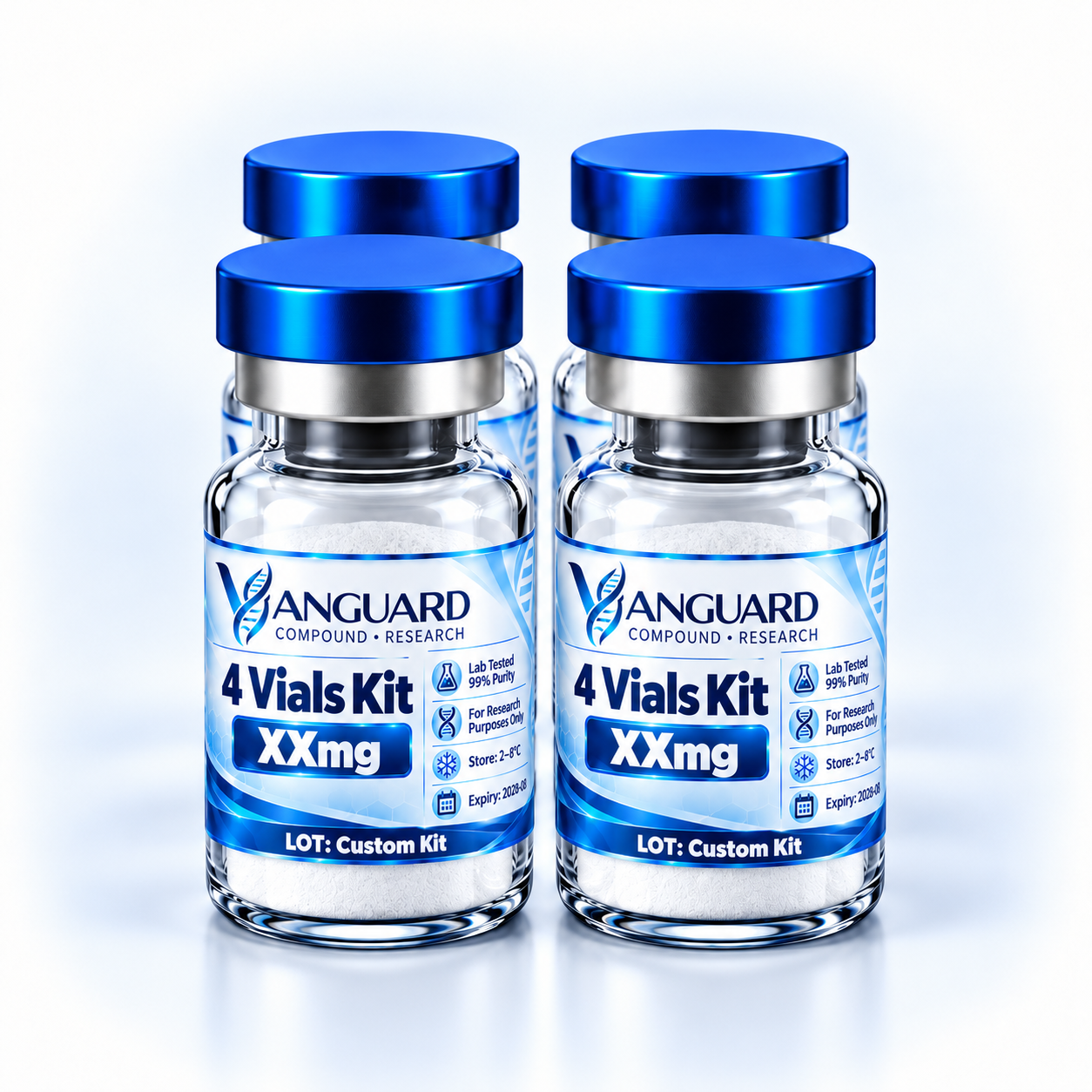

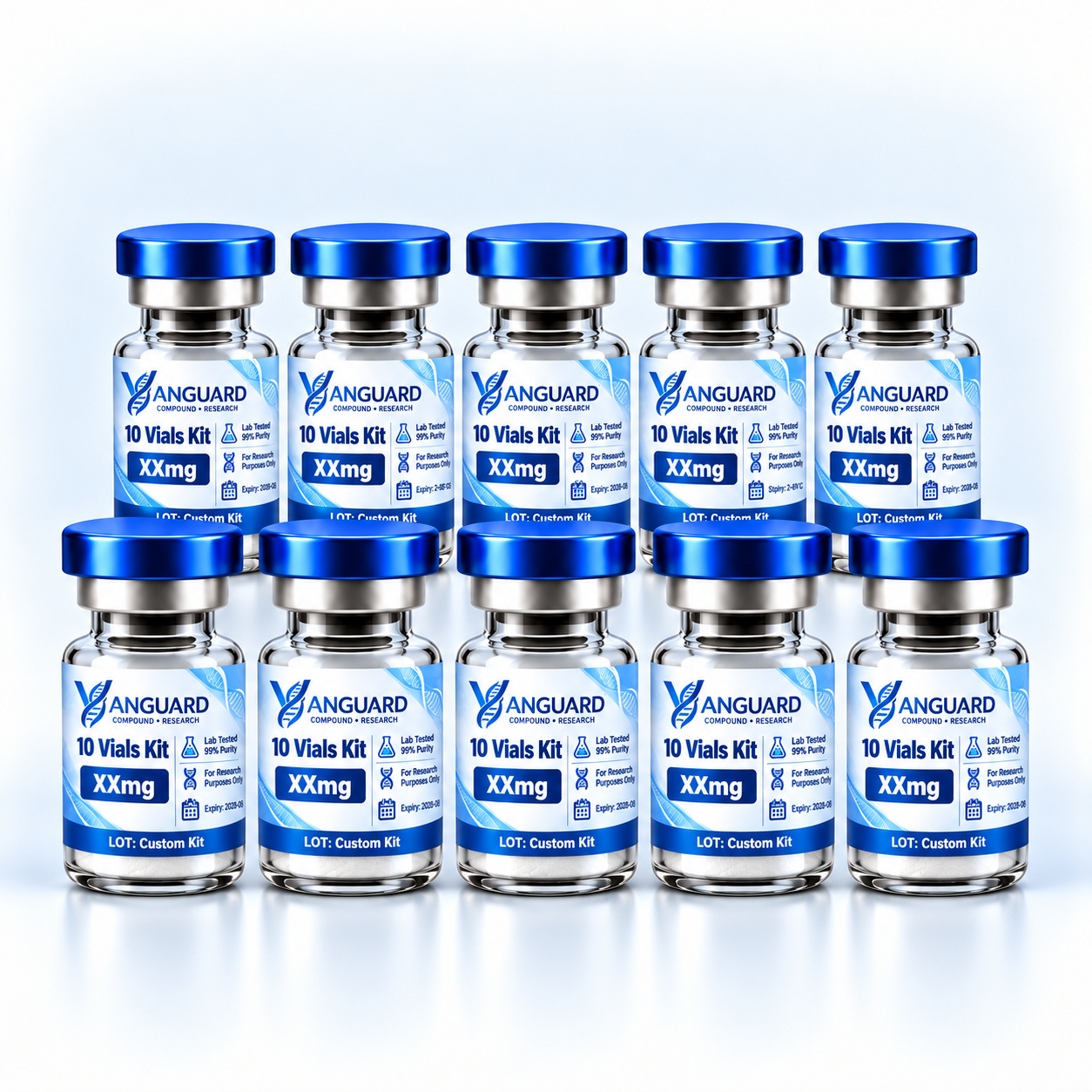
*LC-MS identity confirmation may be performed when analytical review indicates conflicting, atypical, or inconclusive results.
PT-141 is the research designation commonly used for Bremelanotide, a synthetic cyclic peptide derived from research into the melanocortin system.
The melanocortin system consists of several related receptors known as MC1R through MC5R. These receptors are distributed throughout the body and participate in biological functions ranging from pigmentation and metabolism to neurological and behavioural signalling.
PT-141 acts as a melanocortin receptor agonist, meaning that it can activate several members of this receptor family. Research involving Bremelanotide has placed particular interest on melanocortin signalling within the central nervous system and how these pathways influence sexual motivation, desire and physiological sexual responses.
One of the easiest ways to understand PT-141 is to compare its research mechanism with compounds that primarily influence circulation.
Many compounds studied in connection with erectile function work largely by affecting blood vessels and increasing blood flow to specific tissues.
PT-141 is different.
Its activity begins primarily through signalling systems associated with the brain and central nervous system. By interacting with melanocortin receptors, PT-141 allows researchers to examine how neurological signals may contribute to sexual interest, arousal and downstream physiological responses.
This makes PT-141 particularly interesting because sexual function involves more than circulation alone. Motivation, neurological signalling, hormones, emotional processing and physical response can all contribute to the overall process.
Bremelanotide can activate several melanocortin receptor subtypes.
FDA pharmacology information describes its receptor activity in the order MC1R, MC4R, MC3R, MC5R and MC2R, with MC1R and MC4R binding considered particularly relevant at therapeutic exposure levels.
MC4 receptors are found in numerous areas of the central nervous system. Because of this distribution, researchers have investigated whether melanocortin signalling can influence behavioural and physiological processes originating within the brain.
Although the melanocortin pathway is clearly involved in Bremelanotide's pharmacological activity, the exact mechanism through which this receptor activity produces its observed effects on sexual desire has not been completely established.
PT-141 has attracted considerable research attention because it represents a different approach to investigating sexual response.
Instead of concentrating solely on vascular changes, researchers have used Bremelanotide to examine the neurological component of sexual desire and arousal.
Human clinical development included large controlled studies evaluating Bremelanotide in women experiencing reduced sexual desire. These studies examined measures of sexual desire as well as distress associated with low desire.
Earlier research also investigated PT-141 in men and explored physiological responses associated with melanocortin receptor activation.
Together, these studies provided evidence that melanocortin pathways can participate in sexual response and helped establish the central nervous system as an important area of research in sexual physiology.
PT-141 is particularly useful from a research perspective because it helps separate central neurological signalling from mechanisms that act primarily through the vascular system.
Researchers can therefore use the compound as a model for investigating questions involving:
This research has contributed to a broader understanding that sexual response involves coordinated communication between the brain, nervous system, endocrine system and peripheral tissues.
Bremelanotide is notable among research peptides because it has undergone substantial controlled human clinical investigation.
Its development included randomized clinical studies and Phase III trials examining sexual desire in defined patient populations. An FDA-approved pharmaceutical containing Bremelanotide was subsequently authorized in the United States for a specific indication in certain premenopausal women.
This clinical history provides researchers with considerably more human pharmacology information than is available for many experimental research peptides.
However, an independently manufactured research compound should not be considered equivalent to an approved pharmaceutical formulation. Pharmaceutical products are manufactured according to specific quality, formulation, sterility and regulatory standards that are separate from research-grade material.
The melanocortin system is involved in considerably more than sexual function.
Different melanocortin receptor subtypes participate in research involving pigmentation, appetite regulation, metabolism, inflammation, autonomic activity and endocrine signalling.
PT-141 therefore provides researchers with another way to examine how activation of melanocortin receptors can translate neurological signalling into measurable behavioural and physiological responses.
Its combination of preclinical research and human clinical data has made Bremelanotide particularly useful for understanding the relationship between melanocortin receptors, the brain and sexual physiology.
Although Bremelanotide has been evaluated extensively in humans, clinical findings apply to the specific pharmaceutical formulations, populations and study conditions that were actually evaluated.
Research involving PT-141 should therefore distinguish between published evidence concerning pharmaceutical Bremelanotide and independently produced research material.
Analytical purity also does not independently establish sterility, active quantity, biological activity or suitability for pharmaceutical use.
For laboratory research only. Not for human or veterinary use.
Product Name: PT-141
Scientific Name: Bremelanotide
Alternative Name: PT141
Compound Type: Synthetic cyclic peptide
Compound Classification: Melanocortin receptor agonist
Research Category: Melanocortin signalling, neurological signalling and neuroendocrine research
PT-141 is a synthetic cyclic heptapeptide investigated primarily for its interactions with melanocortin receptors and central nervous system pathways involved in behavioural and physiological signalling.
Peptide Sequence: Ac-Nle-Asp-His-D-Phe-Arg-Trp-Lys-OH
Peptide Length: 7 amino-acid residues
Free-Base Molecular Formula: C₅₀H₆₈N₁₄O₁₀
Free-Base Molecular Weight: Approximately 1025.2 g/mol
CAS Number: 189691-06-3
PubChem CID: 9941379
PT-141 contains a modified cyclic peptide structure incorporating norleucine and D-phenylalanine. Its cyclic structure differentiates it from conventional linear peptide sequences and contributes to its molecular characteristics.
The compound may also be supplied in a salt form, including Bremelanotide acetate. The molecular formula and molecular weight can differ depending on the specific salt form and analytical convention being referenced.
PT-141 acts as an agonist at multiple melanocortin receptor subtypes.
Research has focused particularly on melanocortin signalling within the central nervous system and its relationship with neurological, behavioural and physiological responses.
The compound has been studied in areas involving sexual motivation, sexual desire, arousal, neuroendocrine signalling and central nervous system regulation.
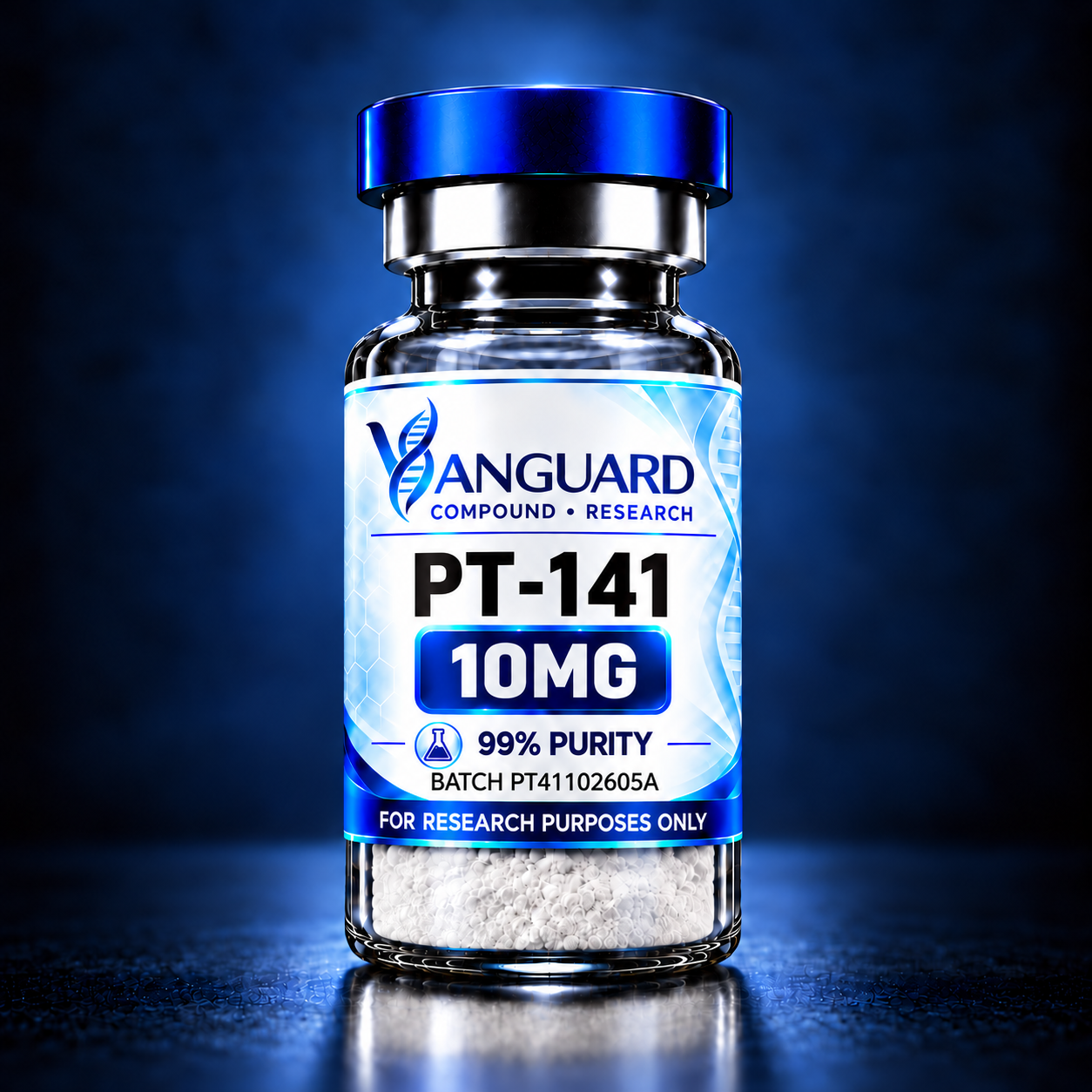
PT-141 research material may be prepared as a lyophilized peptide material for analytical and laboratory applications.
Physical appearance and total lyophilized cake mass can vary depending on manufacturing conditions, salt form, excipients and the lyophilization process.
Visual appearance alone cannot establish identity, purity or active compound quantity.
Analytical evaluation may employ several complementary techniques.
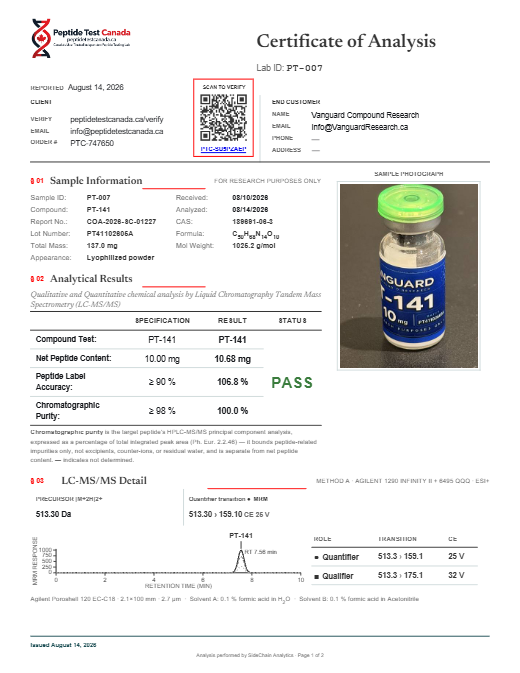
High-Performance Liquid Chromatography (HPLC) may be used to assess chromatographic purity by measuring the relative proportion of the primary compound peak compared with detectable impurities.
Mass Spectrometry (MS) may be used to provide supporting molecular-identity information by comparing experimentally observed molecular mass with the expected molecular characteristics of PT-141.
Purity and molecular identity represent different analytical measurements and should not be interpreted as interchangeable.
Individual research batches may undergo independent analytical testing when applicable.
Batch documentation may include:
Testing results should always be interpreted according to the specific analytical methods actually performed on the corresponding batch.
Lyophilized peptide materials can be affected by environmental conditions including heat, moisture, light exposure and repeated temperature fluctuations.
Research material should be stored according to applicable manufacturer or laboratory stability information and maintained under conditions appropriate for the specific compound and form supplied.
Proper batch identification and laboratory documentation should be maintained throughout storage and analytical use.
HPLC purity represents the relative chromatographic purity of a tested sample and does not independently establish active peptide quantity.
Likewise, molecular identity testing does not by itself establish purity, sterility, endotoxin levels, concentration or biological activity.
Comprehensive characterization may therefore require several complementary analytical techniques depending on the purpose of the research.
PT-141 supplied as research material is intended exclusively for laboratory, analytical and scientific research.
Research-grade PT-141 should not be considered equivalent to an approved pharmaceutical product containing Bremelanotide simply because the compounds share the same active molecular identity.
No dosage, administration or therapeutic-use instructions are provided.
For laboratory research only. Not for human or veterinary use.
Molecular information should clearly identify whether the material is being described as Bremelanotide free base, Bremelanotide acetate or another defined salt form, as this can affect the reported molecular formula and molecular weight.
Product-specific statements regarding purity, identity and quantity should be based on analytical results for the corresponding batch rather than generalized reference specifications.
No documents available for this product yet.
Additional documentation available upon request.
Each batch undergoes analytical review using validated laboratory procedures. HPLC testing is utilized to assess purity and compare the sample profile against established reference standards. Where additional verification is warranted, LC-MS analysis may be performed to support compound identity confirmation.
*See LC-MS Confirmation Information for full details.
Every batch supplied by Vanguard Compound Research is assigned a unique batch number and maintained under documented quality-control procedures with supporting analytical documentation available upon request.
All Vanguard Compound Research orders are shipped directly from within Canada, ensuring efficient delivery, reliable service, and consistent quality-control from fulfillment to arrival.
Products are maintained under documented quality-control procedures to help ensure quality, consistency, and transparency.
Each product is assigned a unique lot number, allowing researchers to match their item directly to its corresponding Certificate of Analysis (COA).
Supporting analytical documentation may be available for qualifying products, including batch-specific quality records and testing information.
Documentation may include: