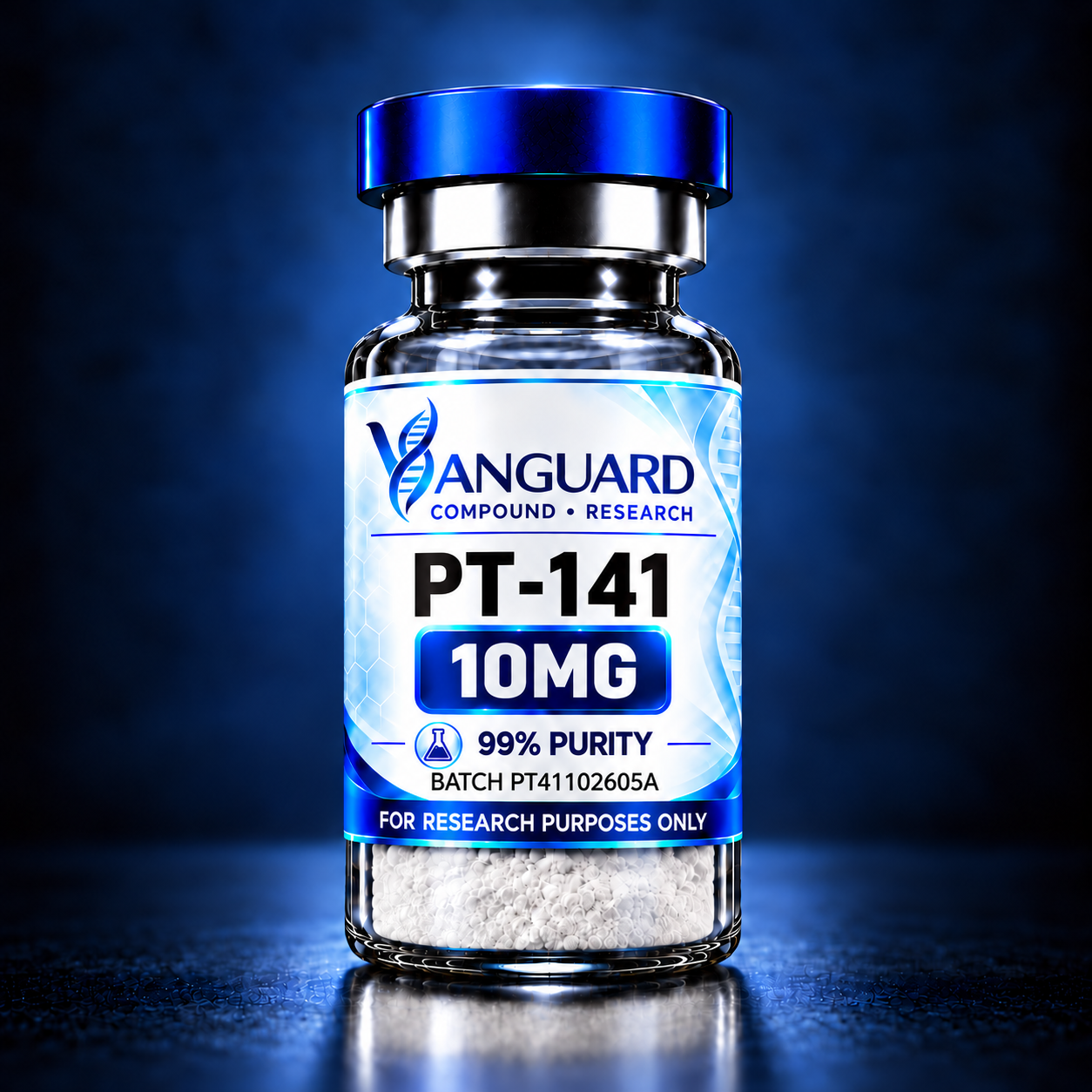
ARA 290 is a synthetic peptide developed for research into cellular protection, inflammatory signaling, nerve function, and tissue-repair pathways. It is derived from a specific region of erythropoietin while being designed to study tissue-protective activity without the red-blood-cell stimulating effects normally associated with erythropoietin. ARA 290 is of particular interest for research involving the innate repair receptor, a receptor complex associated with cellular recovery following inflammation, metabolic stress, or tissue injury. Experimental and early clinical research has explored its potential relevance to neuropathic pain, small-fiber nerve dysfunction, inflammatory conditions, and impaired tissue repair. Researchers are also studying its effects on immune signaling, endothelial function, and the restoration of normal cellular activity following injury. Unlike conventional erythropoietin, ARA 290 is not primarily investigated as a hematopoietic compound, making its tissue-protective signaling properties the central area of interest. Its relatively targeted mechanism has made it useful for studying the relationship between inflammation, nerve damage, and regenerative cellular pathways. This material is intended for laboratory research only, is not authorized by Health Canada for human therapeutic use, and is not intended for human or veterinary administration.
Choose a kit option to save more, or skip this and buy individually above.


*LC-MS identity confirmation may be performed when analytical review indicates conflicting, atypical, or inconclusive results.
ARA 290, also known in scientific literature as cibinetide, is a synthetic peptide developed from the tissue-protective region of erythropoietin. Rather than reproducing the blood-cell stimulating activity normally associated with erythropoietin, ARA 290 was designed to selectively investigate signaling pathways involved in cellular protection, inflammatory regulation, nerve recovery, and tissue repair.
This distinction has made ARA 290 an important research tool for examining how damaged or stressed tissues respond to inflammatory injury without simultaneously stimulating erythropoiesis.
The compound supplied in this format is a 10 mg lyophilized peptide preparation. ARA 290 has the molecular formula C₅₁H₈₄N₁₆O₂₁, molecular weight approximately 1256.6 g/mol, and CAS number 1208243-50-8. ARA 290 10mg
One of the primary research areas surrounding ARA 290 involves the innate repair receptor, sometimes described as a heteromeric receptor complex involving the erythropoietin receptor and the beta common receptor CD131.
During inflammation, injury, ischemia, or metabolic stress, expression of this repair-associated signaling system may increase in affected tissues.
ARA 290 has been studied as a selective activator of this protective signaling pathway.
Activation of the innate repair receptor is being investigated in connection with several biological responses, including:
The scientific interest in ARA 290 therefore extends beyond one individual disease model. It is frequently used to investigate the broader biological relationship between inflammation, tissue injury, nerve signaling, and recovery.
ARA 290 belongs to a category of compounds often investigated for cytoprotective and tissue-protective signaling.
When tissue is exposed to metabolic stress, inflammation, reduced blood supply, oxidative stress, or physical injury, several damaging biological processes can occur simultaneously. These can include inflammatory cytokine production, mitochondrial dysfunction, oxidative damage, endothelial impairment, and programmed cell death.
ARA 290 research examines whether activation of repair-associated signaling pathways can help cells respond more effectively to these stresses.
Experimental models have therefore investigated the compound in relation to:
The purpose of this research is not simply to suppress inflammation, but to understand whether the biological environment surrounding an injured cell can be shifted toward recovery and repair.
One of the most extensively discussed research applications for ARA 290 involves small-fiber neuropathy.
Small nerve fibers play important roles in pain perception, temperature sensation, and autonomic nervous-system function. Damage or dysfunction involving these fibers may contribute to burning discomfort, abnormal sensory responses, altered temperature perception, and autonomic symptoms.
ARA 290 has been investigated experimentally and in early clinical research for its potential effects on nerve structure and function.
Researchers have examined whether repair-receptor signaling may influence:
This area has generated considerable interest because the compound's proposed biological activity involves both inflammatory regulation and tissue repair rather than conventional pain-receptor blockade alone.
ARA 290 has also been studied in models of neuropathic pain, particularly where persistent inflammation or nerve damage contributes to abnormal sensory signaling.
Neuropathic pain differs from ordinary inflammatory pain because the nervous system itself may become altered following injury.
Experimental research involving ARA 290 has investigated whether modulation of innate repair signaling can reduce abnormal inflammatory communication surrounding damaged nerves and support normalization of nerve function.
Research interests include:
The compound is therefore frequently discussed within neuroinflammation research rather than simply as a conventional analgesic candidate.
Inflammation is another important area of ARA 290 research.
Inflammatory responses are necessary for normal tissue defense and repair, but prolonged or excessive signaling can contribute to tissue damage.
ARA 290 has been investigated for its ability to influence inflammatory pathways while simultaneously supporting cellular protection.
Research has examined effects involving inflammatory mediators and immune-cell activity, including signaling associated with macrophages and cytokine production.
This makes the compound particularly interesting for research models where inflammation and tissue injury occur together.
Metabolic disorders can expose nerves and vascular tissues to prolonged oxidative stress, inflammation, and impaired microvascular function.
For this reason, ARA 290 has been investigated in research related to metabolic neuropathy and diabetic complications.
Areas of scientific interest include:
These investigations are intended to better understand whether tissue-protective receptor signaling can influence complications associated with prolonged metabolic stress.
ARA 290 has received particular research attention in connection with sarcoidosis-associated small-fiber neuropathy.
Sarcoidosis is an inflammatory condition in which neurological symptoms may occur even when conventional nerve testing appears relatively normal.
Small-fiber dysfunction can contribute to pain and autonomic symptoms.
Research involving ARA 290 has explored whether activation of repair-associated pathways may influence nerve function and symptom-related biological mechanisms in this setting.
This research contributed significantly to broader scientific interest in ARA 290 as a potential regulator of inflammation-associated nerve dysfunction.
The vascular endothelium—the cellular lining of blood vessels—is highly responsive to inflammation, oxidative stress, and metabolic disturbances.
ARA 290 has consequently been investigated in relation to endothelial function and microvascular biology.
Researchers are interested in whether tissue-protective signaling can help preserve endothelial activity during inflammatory or metabolic stress.
Potential research endpoints include:
These mechanisms may also overlap with neurological and metabolic research because healthy microvascular circulation is important for normal nerve and tissue function.
ARA 290 originates from research into the non-hematopoietic biological actions of erythropoietin.
Erythropoietin is best known for stimulating red-blood-cell production through the classical erythropoietin receptor.
Researchers later identified evidence suggesting that tissue-protective effects may involve different receptor signaling.
ARA 290 was designed to investigate this distinction.
Consequently, one of its defining research characteristics is that it seeks to reproduce certain protective signaling properties associated with erythropoietin without producing the same erythropoietic response.
That feature is central to understanding why ARA 290 has attracted scientific interest.
ARA 290 remains an investigational compound.
Research continues to examine its potential relevance to:
Although experimental and early clinical studies have generated significant scientific interest, additional controlled research is required to establish its clinical efficacy, long-term safety, and appropriate therapeutic role.
ARA 290 is intended for research purposes only and is not authorized by Health Canada for human or veterinary use.
ARA 290 is a short synthetic peptide engineered from a biologically active region associated with erythropoietin's tissue-protective signaling.
Its research value comes primarily from its ability to investigate repair-associated receptor pathways rather than the classical erythropoietic pathway responsible for red-blood-cell production.
This makes ARA 290 particularly useful in experimental models involving inflammation, nerve injury, cellular stress, and tissue recovery.
The principal biological target associated with ARA 290 research is the innate repair receptor pathway.
This signaling system is believed to become increasingly relevant during periods of:
ARA 290 is used experimentally to investigate the downstream biological consequences of activating this pathway.
ARA 290 is widely investigated in experimental models involving peripheral nerve dysfunction.
Research areas include:
ARA 290 is studied for its potential influence on inflammatory pathways associated with tissue damage.
Common research endpoints include:
ARA 290 is used to investigate cellular repair mechanisms following injury or metabolic stress.
Areas of interest include:
ARA 290 has been examined in experimental models related to metabolic dysfunction.
Research interests include:
Experimental studies have also examined ARA 290 in relation to vascular and endothelial biology.
Areas of investigation include:
ARA 290 is primarily studied because it appears to selectively engage tissue-protective signaling pathways associated with the innate repair receptor.
Rather than focusing on the classical erythropoietin pathway responsible for stimulating red-blood-cell production, ARA 290 research focuses on cellular responses associated with:
Cell protection → inflammatory regulation → nerve support → endothelial protection → tissue recovery.
This combination of biological effects makes the peptide useful for research involving complex disorders where inflammation and tissue damage occur simultaneously.
ARA 290 may be relevant to laboratory studies examining:
Depending on the research model, investigators may evaluate biochemical, histological, neurological, inflammatory, or vascular endpoints.
Form: Lyophilized peptide powder
Nominal vial content: 10 mg
Appearance: Dry lyophilized material
Container format: Research vial
Research status: Investigational compound
Lyophilization is commonly used with research peptides because removal of water can improve stability during appropriate storage prior to experimental preparation.
ARA 290 should be handled using appropriate laboratory procedures designed for research peptides.
Recommended general considerations include:
Storage conditions should always follow the requirements established for the specific research protocol and product presentation.
Because peptides can be sensitive to environmental conditions, researchers should minimize unnecessary agitation, contamination, temperature cycling, and prolonged exposure to unsuitable conditions.
Experimental preparation should be performed using appropriate laboratory equipment and validated research procedures.
Variables such as solvent selection, concentration, pH, temperature, storage duration, and assay methodology may influence experimental results and should therefore be controlled within the study design.
ARA 290 is suitable for controlled laboratory investigation involving:
Results obtained from experimental systems should not automatically be interpreted as demonstrating clinical efficacy.
ARA 290 is an investigational research compound.
It is not authorized by Health Canada for human or veterinary use and is supplied strictly for research purposes.
It is not intended for clinical, diagnostic, therapeutic, or veterinary administration.
No documents available for this product yet.
Additional documentation available upon request.
Each batch undergoes analytical review using validated laboratory procedures. HPLC testing is utilized to assess purity and compare the sample profile against established reference standards. Where additional verification is warranted, LC-MS analysis may be performed to support compound identity confirmation.
*See LC-MS Confirmation Information for full details.
Every batch supplied by Vanguard Compound Research is assigned a unique batch number and maintained under documented quality-control procedures with supporting analytical documentation available upon request.
All Vanguard Compound Research orders are shipped directly from within Canada, ensuring efficient delivery, reliable service, and consistent quality-control from fulfillment to arrival.
Products are maintained under documented quality-control procedures to help ensure quality, consistency, and transparency.
Each product is assigned a unique lot number, allowing researchers to match their item directly to its corresponding Certificate of Analysis (COA).
Supporting analytical documentation may be available for qualifying products, including batch-specific quality records and testing information.
Documentation may include: