GF-1 LR3, also known as Long R3 Insulin-Like Growth Factor-I, is a modified 83-amino-acid analogue of naturally occurring IGF-1. It contains a 13-amino-acid N-terminal extension and an arginine substitution at position 3, modifications designed to alter its interaction with insulin-like growth factor binding proteins while maintaining activity at the IGF-1 receptor.
Laboratory and preclinical research has investigated IGF-1 LR3 in areas including cellular growth, skeletal-muscle biology, protein synthesis, tissue development, glucose metabolism, cellular proliferation, and regenerative signaling. Its reduced interaction with several IGF-binding proteins has made it particularly useful as a research reagent for studying IGF-1 receptor signaling and growth-related cellular pathways.
IGF-1 LR3 has been extensively used in experimental cell-culture and animal models, but these findings should not automatically be interpreted as established therapeutic effects in humans. Continued research is focused on understanding IGF signaling, tissue growth, cellular repair, metabolism, and the biological consequences of altered IGF-binding-protein interactions.
This material is intended for laboratory research only, is not authorized by Health Canada for human therapeutic use, and is not intended for human or veterinary administration.
Choose a kit option to save more, or skip this and buy individually above.
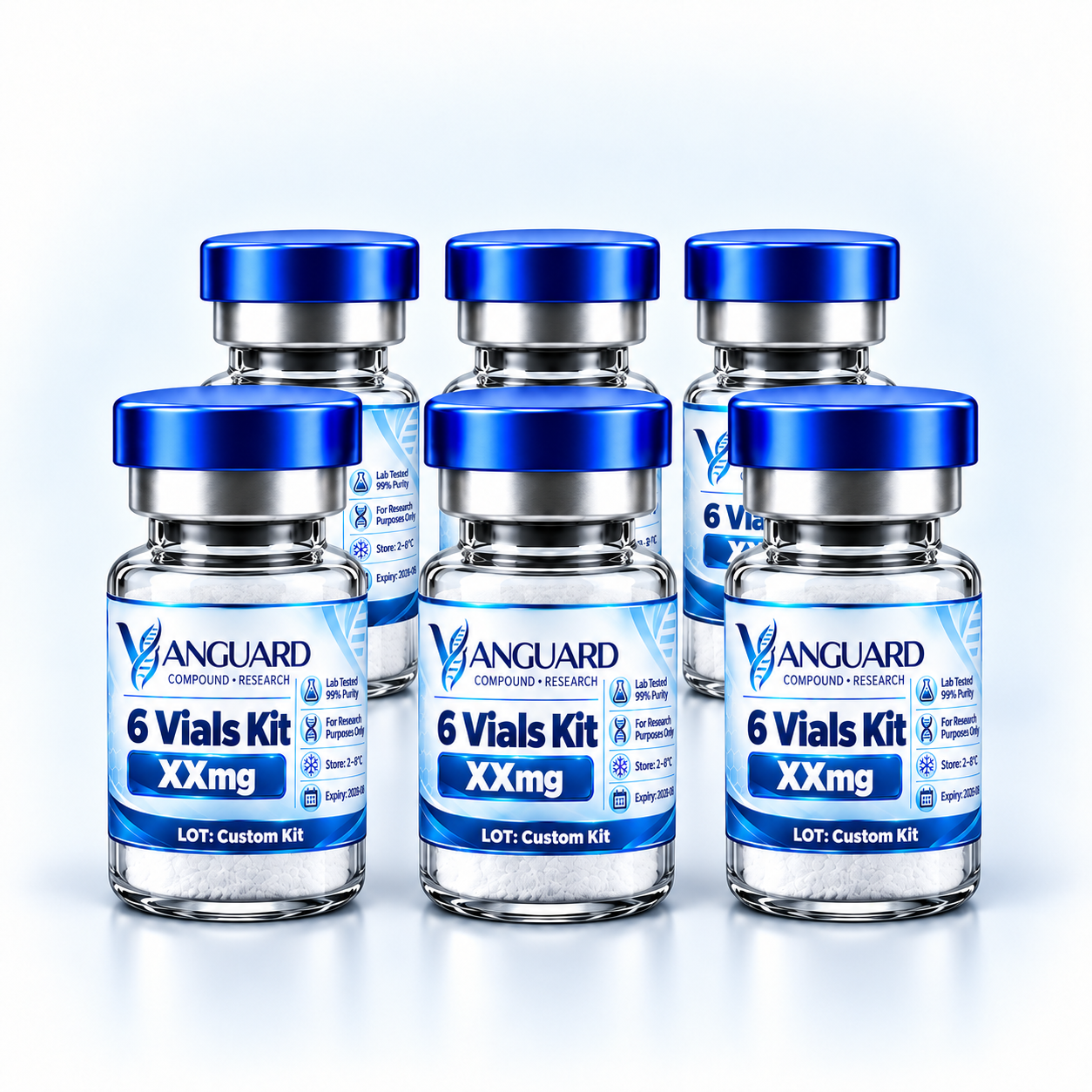
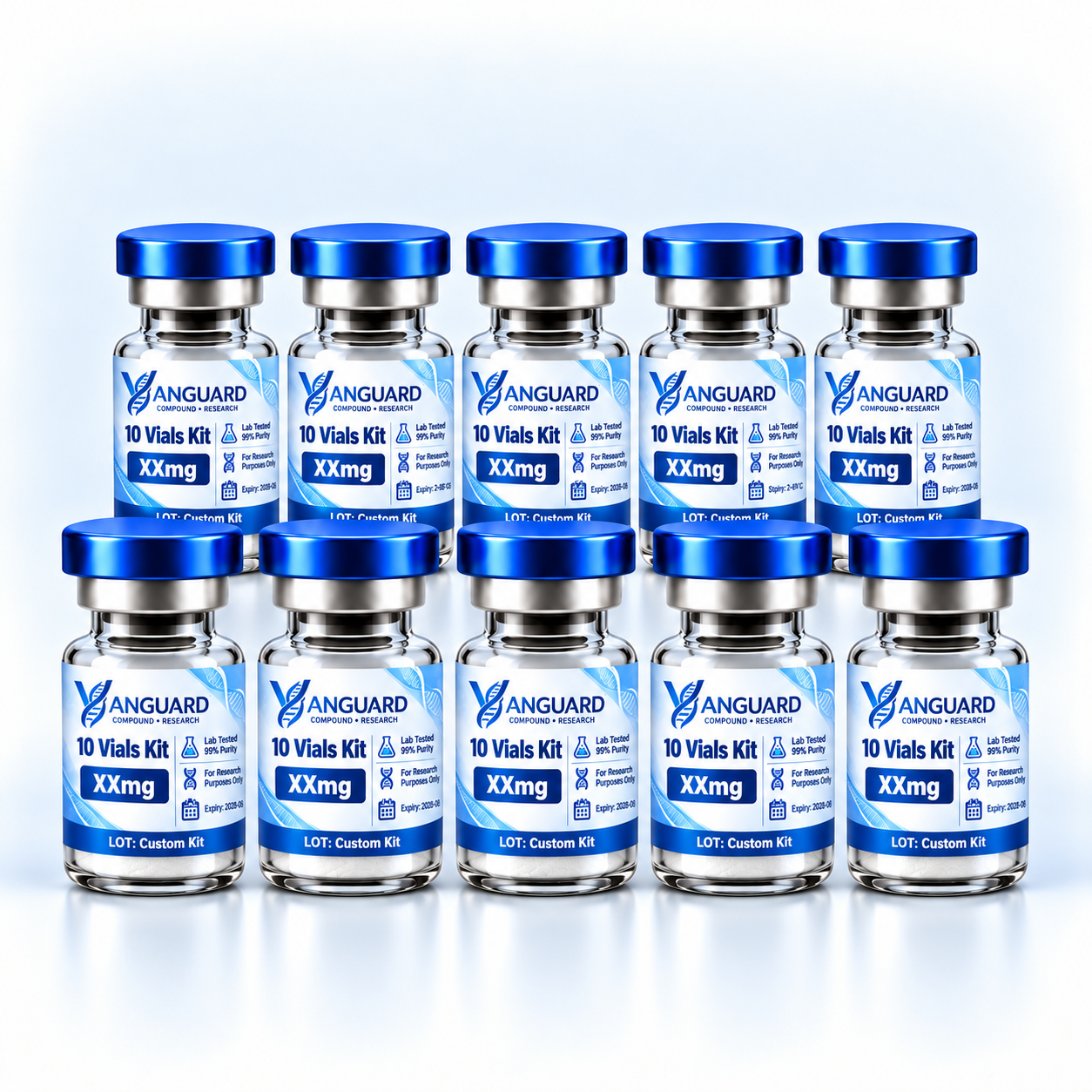
*LC-MS identity confirmation may be performed when analytical review indicates conflicting, atypical, or inconclusive results.
IGF-1 LR3, formally known as Long R3 Insulin-Like Growth Factor-I, is a laboratory-developed analogue of human insulin-like growth factor-1.
Native human IGF-1 consists of 70 amino acids. IGF-1 LR3 incorporates two important structural modifications: a 13-amino-acid extension at the N-terminus and replacement of the naturally occurring glutamic acid at position 3 with arginine.
Together, these modifications produce an 83-amino-acid molecule that retains biological activity at the IGF-1 receptor while demonstrating substantially altered interactions with IGF-binding proteins.
IGF-1 is an important signaling molecule involved in cellular growth, development, metabolism, differentiation, and survival.
Many of its biological effects occur through interaction with the IGF-1 receptor, a cell-surface receptor found throughout numerous tissues.
Activation of the IGF-1 receptor can initiate intracellular signaling pathways involved in:
These pathways make the IGF system an important research area in muscle biology, developmental biology, metabolism, tissue regeneration, aging, and cancer biology.
One of the most important characteristics of IGF-1 LR3 is its reduced interaction with several naturally occurring IGF-binding proteins, commonly abbreviated as IGFBPs.
IGFBPs normally bind IGF-1 and influence its distribution and biological availability.
Experimental studies found that the Arg3 substitution and N-terminal extension substantially reduce the analogue's interaction with IGF-binding proteins while preserving activity through the IGF-1 receptor.
This characteristic has made IGF-1 LR3 particularly valuable in laboratory systems where researchers want to investigate IGF receptor signaling with less interference from IGF-binding proteins.
IGF signaling has long been studied in skeletal-muscle biology because it is involved in pathways regulating muscle-cell development, protein metabolism, and cellular growth.
In laboratory studies using muscle-cell models, IGF-1 LR3 and related IGF analogues have demonstrated activity involving:
Early experiments using rat L6 myoblasts demonstrated increased biological activity of Long R3 IGF-I compared with native IGF-I under experimental conditions where IGF-binding proteins were present.
These findings have made IGF-1 LR3 a widely studied research molecule in skeletal-muscle and anabolic-signaling research.
IGF-1 receptor signaling plays an important role in regulating cellular proliferation.
When activated, the receptor can influence intracellular signaling networks including pathways associated with PI3K/AKT and MAPK signaling.
These pathways participate in processes including:
Because IGF-1 LR3 interacts strongly with the IGF-1 receptor while showing reduced binding to IGFBPs, it is frequently used in laboratory cell-culture systems examining growth and proliferation.
Commercial research preparations are also used in serum-free cell-culture systems to support cellular proliferation, productivity, and viability.
The IGF signaling system is closely associated with tissue development and repair biology.
Experimental research has examined IGF signaling in tissues including:
IGF signaling can influence cellular proliferation, differentiation, survival, and extracellular tissue remodeling.
For this reason, IGF-1 LR3 is frequently used experimentally when researchers want to investigate how sustained IGF receptor activation affects growth-related signaling pathways.
This does not establish IGF-1 LR3 as a regenerative treatment in humans; rather, it provides researchers with a controlled molecular tool for investigating these biological processes.
The IGF system includes several IGF-binding proteins that regulate naturally occurring IGF-1.
These proteins can influence how IGF-1 is transported, distributed, protected from degradation, and presented to receptors.
IGF-1 LR3 was specifically developed with structural modifications that reduce its affinity for many of these binding proteins.
Experimental research has shown that these changes can substantially alter biological activity in cell systems that produce IGFBPs.
This characteristic is one of the primary reasons IGF-1 LR3 differs experimentally from native IGF-1.
The IGF signaling network also interacts with metabolic pathways.
Because IGF-1 shares structural and signaling similarities with insulin, researchers have investigated IGF-1 and IGF-1 analogues in relation to:
Animal research has examined IGF-1 LR3 in metabolic disease models, including experimental diabetes, although results from these models cannot automatically be translated into human clinical outcomes.
IGF-1 LR3 has also been extensively studied from a structural and protein-folding perspective.
Research using nuclear magnetic resonance and protein-folding analysis has shown that the IGF-I portion of Long R3 IGF-I retains a structure closely resembling native IGF-I despite its N-terminal extension and Arg3 substitution.
Researchers have also investigated how these modifications affect disulfide-bond formation and protein folding.
IGF-1 LR3 contains the characteristic disulfide structure associated with the IGF family, which is important for maintaining the biologically active three-dimensional configuration of the molecule.
One of the most established research applications of IGF-1 LR3 is its use in cell-culture systems.
It has been used experimentally to support:
Its reduced affinity for IGF-binding proteins can be particularly useful in serum-free or chemically defined culture conditions.
IGF-1 LR3 has substantial experimental literature, but important limitations remain when interpreting that research.
A large portion of the available evidence comes from:
Results obtained under laboratory conditions cannot automatically establish safety, effectiveness, dosing, or therapeutic outcomes in humans.
IGF signaling is also biologically complex because the pathway influences cellular growth and survival across many different tissues.
IGF-1 LR3 is best regarded as a specialized laboratory analogue used for investigating the IGF signaling system.
Its 13-amino-acid extension, Arg3 substitution, preserved IGF-1 receptor activity, and reduced interaction with IGF-binding proteins provide researchers with a useful tool for studying:
Continued laboratory research is necessary to further characterize its molecular behavior and determine how experimental findings relate to broader mammalian biology.
For laboratory research only. Not for human or veterinary use.
IGF-1 LR3 is a modified recombinant analogue of human insulin-like growth factor-1 developed for laboratory and cell-culture research.
IGF-1 LR3 contains a 13-amino-acid N-terminal extension and an Arg substitution at position 3 of the native IGF-1 sequence.
IGF-1 LR3 consists of an IGF-1-derived sequence modified through an N-terminal extension and a Glu3-to-Arg3 substitution.
The 13-amino-acid N-terminal extension has been described as:
MFPAMPLSSLFVN
The molecule retains the characteristic IGF-I structural domain and disulfide-bond architecture.
The molecular formula, molecular weight, and CAS identifier correspond to established Long R3 IGF-I reference information.
IGF-1 LR3 research material may be supplied in lyophilized form for controlled laboratory storage and analytical applications.
Physical appearance alone cannot establish protein identity, quantity, biological activity, or purity and should not replace appropriate analytical testing.
Analytical testing may be used to evaluate the identity, purity, quantity, and structural characteristics of individual IGF-1 LR3 batches.
Common analytical techniques may include:
Reference preparations of recombinant LR3 IGF have reported molecular-mass measurements around 9,108–9,112 Da, consistent with the expected molecular structure.
Each manufactured batch may be assigned a unique batch or lot number allowing analytical documentation to be associated with the corresponding material.
Batch documentation may include:
Analytical results apply specifically to the samples and manufacturing batch evaluated by the analytical laboratory.
Protein research materials are sensitive to environmental conditions and should be stored using appropriate laboratory procedures.
Recommended handling principles include:
Reference commercial LR3 IGF preparations are commonly stored refrigerated in their supplied form, while prepared laboratory solutions may require different conditions depending upon formulation and experimental protocol.
No single analytical technique establishes every characteristic of a recombinant protein sample.
HPLC can provide information regarding chromatographic purity but does not independently establish absolute protein quantity or biological activity.
Mass spectrometry can support molecular-identity confirmation by evaluating molecular mass but does not independently establish vial quantity or receptor activity.
SDS-PAGE can provide information about apparent molecular size and sample purity but is not by itself sufficient to confirm molecular identity.
Where quantitative peptide or protein content is required, an appropriate validated quantitative assay or independent mass determination should be used.
Where biological activity is relevant to an experiment, an appropriate functional cell-based assay may also be required.
IGF-1 LR3 supplied through Vanguard Compound Research is intended exclusively for legitimate laboratory, analytical, and scientific research applications.
The material is not manufactured, packaged, or represented as:
For laboratory research only. Not for human or veterinary use.
Technical information presented for IGF-1 LR3 is intended to support product identification, laboratory research, and interpretation of available scientific literature.
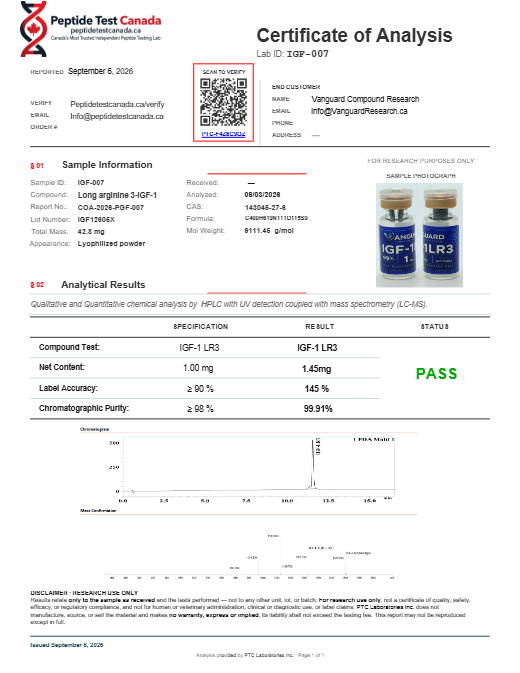
Product-specific characteristics such as purity, tested quantity, molecular identity, batch number, and analytical results should be verified using the Certificate of Analysis or analytical documentation corresponding to the individual manufacturing batch.
Scientific descriptions summarize areas of published research and should not be interpreted as evidence of established clinical safety, effectiveness, or approval for therapeutic use.Product Specifications
No documents available for this product yet.
Additional documentation available upon request.
Each batch undergoes analytical review using validated laboratory procedures. HPLC testing is utilized to assess purity and compare the sample profile against established reference standards. Where additional verification is warranted, LC-MS analysis may be performed to support compound identity confirmation.
*See LC-MS Confirmation Information for full details.
Every batch supplied by Vanguard Compound Research is assigned a unique batch number and maintained under documented quality-control procedures with supporting analytical documentation available upon request.
All Vanguard Compound Research orders are shipped directly from within Canada, ensuring efficient delivery, reliable service, and consistent quality-control from fulfillment to arrival.
Products are maintained under documented quality-control procedures to help ensure quality, consistency, and transparency.
Each product is assigned a unique lot number, allowing researchers to match their item directly to its corresponding Certificate of Analysis (COA).
Supporting analytical documentation may be available for qualifying products, including batch-specific quality records and testing information.
Documentation may include: